Head Office
No. 8 Klunye Adjele Street
East Legon, Accra – Ghana

No. 8 Klunye Adjele Street
East Legon, Accra – Ghana

Promoting a healthy infrastructure maintenance culture in Ghana cannot rely on civic appeals alone. It must be anchored in law and more importantly in strict enforcement.
Unfortunately, the challenge with Ghana’s legal system is not necessarily the absence of laws. In many cases, the laws exist, however the real weakness lies in inconsistent enforcement.
Too often, wrongdoing goes unpunished because:
In fact, when laws are not enforced consistently, deterrence collapses and people begin to assume that violations carry little consequence.
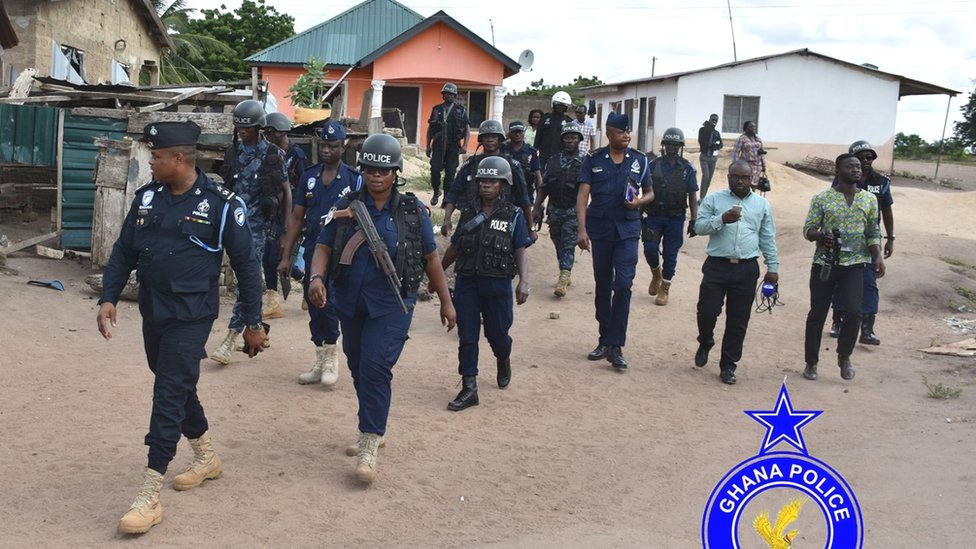
If Ghana is serious about reversing its poor maintenance culture, there must be firm legal consequences for individuals who engage in these criminal activities but not limited to the following:
Indeed, vandalism must not be treated as a minor offense. It must be treated as an economic sabotage supported by strong enforcement mechanisms with visible prosecution, this can reset public behavior over time.

Additionally, this accountability measures and legal reform must also extend to contractors and engineers. Infrastructure failure is not always caused by citizens. Some instances such as, poor construction quality, negligence, or compromised procurement processes lead to premature deterioration
To address this, Ghana must institutionalize:
Furthermore, an efficient due diligence must be conducted before any project is commissioned, engineers should formally disclose:
Consequently, the above due diligence ensures that, if infrastructure fails prior to its estimated lifecycle, engineers and contractors will be held accountable. In fact, if a road, bridge or public facility deteriorates significantly before its declared lifespan, immediate investigations must be triggered.
Importantly, contractors must be held financially and legally responsible for substandard delivery. Public contracts must not be treated as political rewards because they are development instruments funded by taxpayers.
In other words, development requires measurable standards, therefore, without benchmarks, there is no accountability.
When citizens, contractors, engineers, and public officials are all held accountable under clearly enforced laws, infrastructure protection becomes a shared national obligation rather than a rhetorical ideal.
Countries that have successfully sustained infrastructure systems combine three pillars:
Ghana already possesses elements of the first pillar. The urgent need lies in strengthening the second to encourage the third.
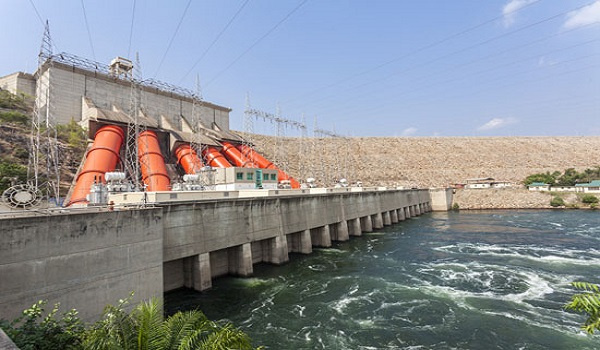
In conclusion, infrastructure investment is capital intensive, hence, every road, rail line, hospital, or power facility must represents scarce public resources and that should not be undermined.
If Ghana institutionalizes strict enforcement devoid of corruption and political interference, a healthy maintenance culture can shift from aspiration to reality.
Development is not only about building new projects. It is about protecting them.
Therefore, when laws are applied consistently to citizens, contractors, and public officials alike, infrastructure preservation becomes systemic and sustainable.
