Head Office
No. 8 Klunye Adjele Street
East Legon, Accra – Ghana

No. 8 Klunye Adjele Street
East Legon, Accra – Ghana
Ghana stands at a defining crossroads not because it lacks democratic structures, but because of a silent fracture steadily widening between generations. What is emerging is not merely political apathy among Gen Z; it is something far more consequential: a broken political spirit.
This is a generation that has inherited democracy yet feels excluded from governance. A generation that is informed, vocal, and digitally empowered, yet structurally marginalized. If this disconnect is not addressed with urgency and intentionality, the policies of tomorrow risk lacking the depth, continuity, and legitimacy required to endure.
Ghana’s political evolution was not accidental; it was deliberately cultivated through generational transfer of knowledge, values, and responsibility.
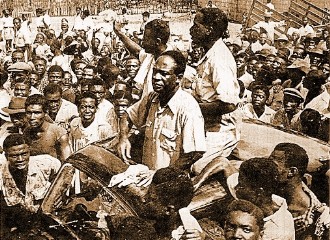
From the pre-independence period through the early 2000s, political traditions across ideological divides emphasized mentorship, apprenticeship, and ideological grounding. The UP Tradition institutionalized political grooming, ensuring that emerging leaders understudied experienced statesmen before assuming responsibility. Similarly, political movements such as the CPP, PNC, and later PNDC/NDC embedded strong ideological continuity, rooted in narratives of struggle, sacrifice, state formation, and democratic transition.
Political education was intentional. Young minds were shaped not only to participate in governance but to understand its historical and institutional foundations. While accountability was not flawless, there existed a structured pathway for leadership development one that produced individuals who were both politically active and institutionally grounded.
From approximately 2008 to the present, Ghana’s political culture has undergone a profound transformation.
Public discourse has increasingly devolved into personality-driven and insult-laden exchanges, replacing issue-based engagement. Elders—once custodians of wisdom and guidance—have become subjects of public ridicule, eroding respect as a cornerstone of leadership transfer. At the same time, political participation is increasingly perceived as a pathway to personal gain rather than national service.
The consequences of this shift are far-reaching. The system no longer consistently produces leaders; it produces contestants. The collapse of mentorship structures has created a vacuum—one in which Gen Z has become politically aware but institutionally alienated.
Gen Z in Ghana is far from silent. Indeed, it is arguably the most expressive generation in the country’s history. However, its engagement is largely external to formal political systems.
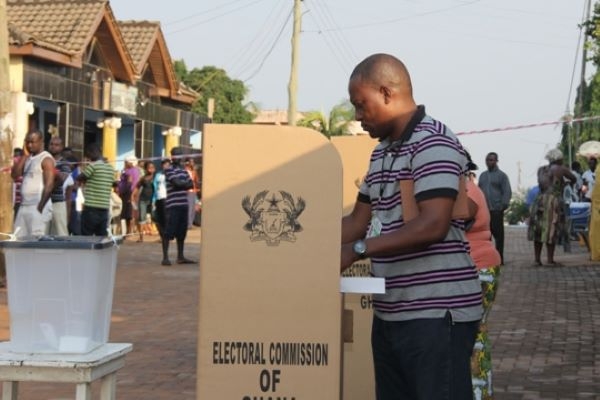
Across Africa, surveys such as Afrobarometer consistently show that a majority of young people express dissatisfaction with political leadership, citing corruption, lack of accountability, and exclusion as key concerns. In Ghana, this sentiment is reflected in declining trust in political institutions, even when voter registration levels remain relatively strong.
Social media has become the primary arena of political expression—where narratives are shaped, authority is challenged, and public sentiment is mobilized. Yet, this influence rarely translates into institutional participation.
The result is a dangerous imbalance: a generation capable of influencing public opinion but largely unable to influence policy.
Ghana’s current political ecosystem has failed to bridge three critical gaps:
As a result, Millennials who should serve as a transitional bridge remain caught between legacy systems and emerging expectations. Gen Z, in turn, has increasingly disengaged from traditional political pathways, choosing instead to challenge the system from the outside.
The long-term implications of this generational disconnect are profound.
When young people are excluded from governance, policies risk becoming short-term, reactionary, and misaligned with future realities. Institutional memory is weakened, leadership pipelines erode, and national development becomes inconsistent.
A system that fails to integrate its next generation into decision-making creates a cycle in which each generation effectively starts from zero repeating past mistakes and undermining sustained progress.
Addressing this challenge requires more than cosmetic reform; it demands structural recalibration.
Ghana’s greatest risk is not political competition or economic uncertainty, it is generational disconnection.
A nation that fails to prepare its next generation for leadership is not evolving; it is regressing.
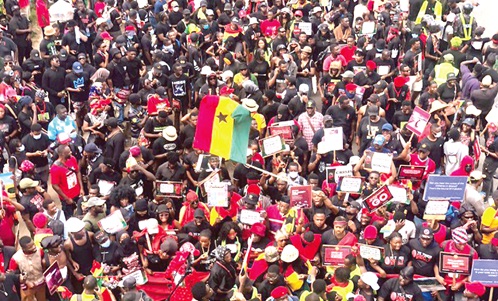
Gen Z is not apathetic. They are observant, critical, and expectant. However, without deliberate inclusion, their frustration may harden into permanent disengagement or manifest as unstructured resistance.
The responsibility rests with today’s leadership:
to rebuild trust,
to restore mentorship,
and to reconnect generations.
Because the future of Ghanaian politics will not be determined by those currently in power but by whether those who come next are prepared, empowered, and inspired to lead.
