Head Office
No. 8 Klunye Adjele Street
East Legon, Accra – Ghana

No. 8 Klunye Adjele Street
East Legon, Accra – Ghana

Infrastructure development remains central to economic transformation in Ghana. Yet beyond the debate about building new roads, railways, hospitals, and factories lies a more fundamental crisis: Ghana’s poor maintenance culture.
Generally for a country that still struggles with inadequate infrastructure, her inability to preserve existing projects is both economically damaging and developmentally regressive. The issue is not simply about construction quality. It is about civic responsibility, institutional enforcement, and national attitude.
Moreover, Osagyefo Dr. Kwame Nkrumah remains widely celebrated for his ambitious infrastructure drive in the early post-independence period, his administration delivered transformative projects such as: The Accra–Tema Motorway, Tema Harbour & The Akosombo Dam.
Nonetheless, these projects were not symbolic gestures, instead, they were foundational pillars meant to industrialize Ghana and sustain long-term growth. Nonetheless, decades later, many state factories have collapsed. Even infrastructure built in the Fourth Republic has deteriorated at an alarming speed, roads barely one year old require major rehabilitation, public facilities fall into disrepair long before their expected lifecycle ends.
This is not merely a funding problem. It is a maintenance failure.
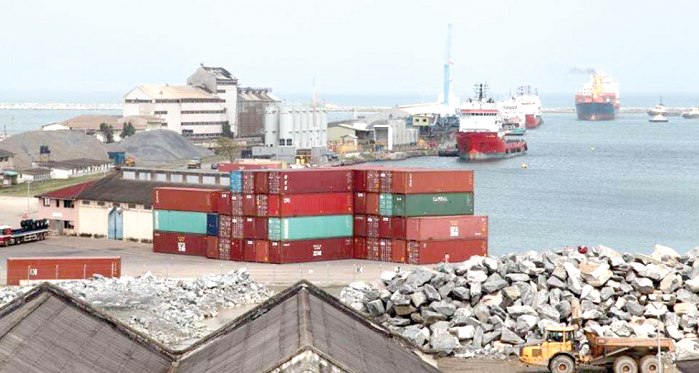
The deterioration of infrastructure in Ghana can be traced to three interconnected factors:
Project supervision is often inadequate, it turns out that, maintenance budgets are inconsistently released whereas, procurement processes sometimes reward lowest-cost execution over long-term durability.
Additionally, in Ghana, most public properties are routinely vandalized. Particularly, Street lights are stripped of cables and bulbs, traffic lights are destroyed through reckless driving. And most often posters are pasted indiscriminately on newly constructed interchanges.
In recent times, there have been reported incidents of individuals throwing stones at the Tema–Mpakadan railway train, and also the incident which occurred during the latter times of 2024, where a truck was parked directly on the railway line, leading to an avoidable collision. Such acts reflect more than indiscipline; rather, they reflect a troubling detachment from national ownership by citizens.
Moreover, public servants have also been cited for misuse of government vehicles and equipment. The visible deterioration of the Accra Sports Stadium and other sports facilities in Ghana underscores institutional lapses in facility management.
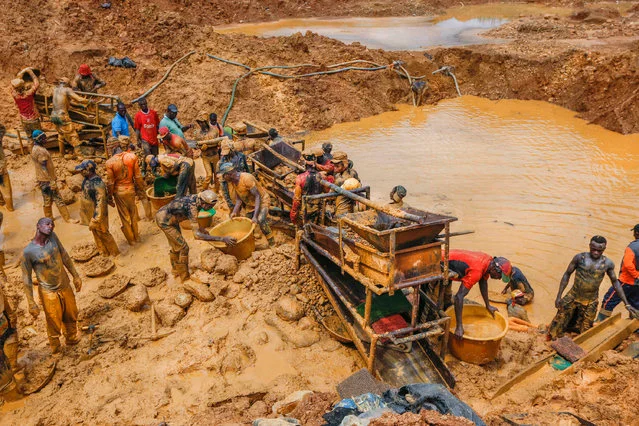
Illegal mining, popularly known as Galamsey represents the most destructive form of poor maintenance culture in Ghana.
Forest reserves and water bodies are degraded for short-term financial gain, imposing long-term environmental and economic costs on the state. This illegality has resulted in the rise of the cost of water treatment in Ghana, whereas affecting agricultural productivity declines which raises public health risks and concerns.
This is not only an environmental crisis. It is a governance and civic crisis. When citizens prioritize immediate personal income over preservation of shared resources, development becomes unsustainable.
One of the most damaging consequences of Ghana’s maintenance culture is fiscal inefficiency.
In many cases, the cost of rehabilitating neglected infrastructure exceeds the cost of building new projects. The country repeatedly diverts scarce resources into repairing avoidable damage instead of expanding infrastructure access.
For a lower-middle-income country with pressing developmental needs, this cycle is economically counterproductive.
Infrastructure maintenance cannot be delegated solely to government, it is a shared responsibility.
Government must:
However, citizens must also:
In high-performing jurisdictions such as Singapore, civic discipline complements state enforcement; laws are respected because citizens internalize their role in nation-building. Ghana must cultivate a similar national ethic.
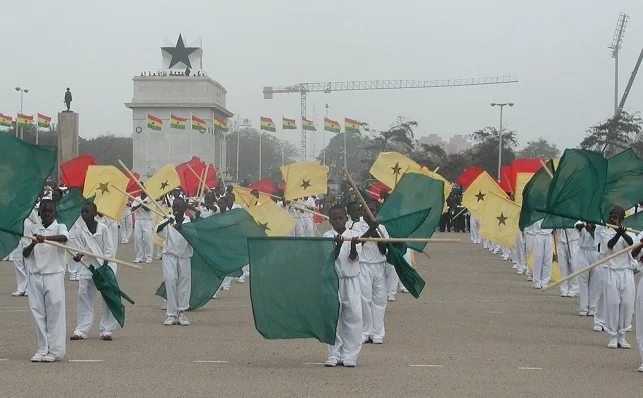
The final lines of Ghana’s National Pledge remind citizens to uphold and defend the good name of the country. Infrastructure preservation is part of that obligation.
A sustainable development model requires:
Maintenance culture is not merely technical; it is moral and institutional.
In Conclusion, Ghana’s development story will not be determined by the number of projects commissioned each year. It will be determined by how long those projects serve their intended purpose.
If roads fail within twelve months, if street lights are routinely vandalized, if water bodies are destroyed, and if public facilities collapse prematurely, then infrastructure investment becomes an endless cycle of replacement rather than progress.
The challenge of poor maintenance culture in Ghana is therefore not secondary to development; it is central to it.
In fact, Nation-building does not end when construction is completed. It begins there.
