Head Office
No. 8 Klunye Adjele Street
East Legon, Accra – Ghana

No. 8 Klunye Adjele Street
East Legon, Accra – Ghana
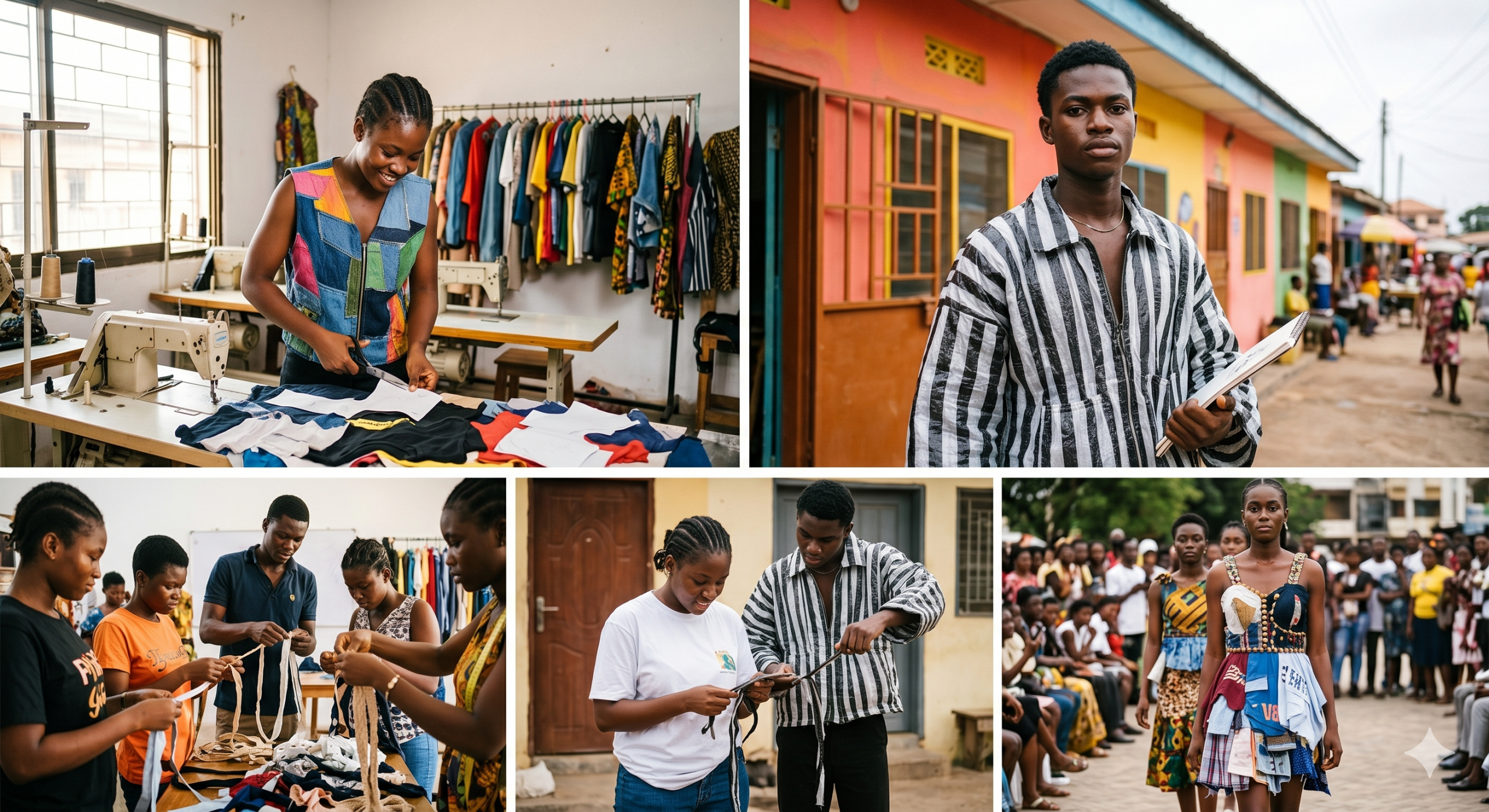
Written by Xolani Annakie
The narrative of global high fashion is undergoing a quiet, wordless takeover. For decades, the barrier to entry into the fashion world felt impossibly high for a kid growing up in Accra, Kumasi, or Tamale. The dominant rulebook whispered that you needed expensive textiles, an elite design degree, and a runway in Paris or Milan to be seen.
Then came Kalu Putic.
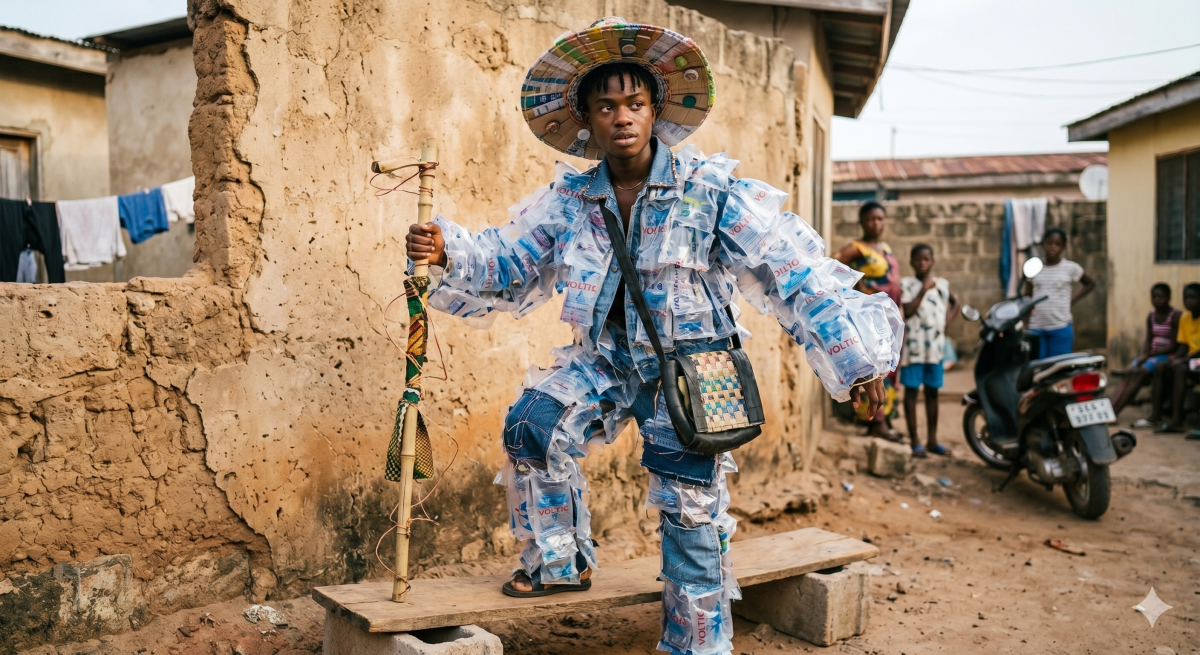
Operating out of Mekelle in the Tigray region of northern Ethiopia, the 15-year-old self-taught creator, whose real name is Kaleab, has completely bypassed the traditional fashion establishment. Armed with nothing but an insane eye for silhouette, a smartphone, and a concrete wall as his runway, Kalu constructs avant-garde couture out of what society discards: plastic bags, tyre rubber, fragments of woven carpet, and scrap wire.
With millions of followers and recognition from global icons like SZA and Timbaland, Kalu’s rise sends a powerful shockwave across the continent. His journey offers a brilliant blueprint for how Ghanaian fashion design youth can revolutionise the industry through independent circular fashion from their own backyards.
What Kalu proves to a child in Ghana is that style is an internal frequency, not a luxury purchase. When a young creator realises they can take everyday, mundane materials—like the ubiquitous plastic water sachets or scraps from local tailors—and drape them into structures that rival high-end luxury houses, the psychological barrier cracks open.
Ghanaian youth are already surrounded by a rich visual culture: the geometric storytelling of Kente, the vibrant chaos of local fashion hubs, and the sharp, tailored lines of everyday street style. Kalu’s viral success gives kids permission to look at their immediate surroundings not as a limitation, but as a raw material sandbox, sparking a wave of grassroots sustainable African fashion talent.
Ghana sits at a unique intersection of global fashion. Kantamanto in Accra is one of the largest secondhand clothing markets in the world. While it represents a massive environmental challenge, through the lens of Kalu Putic’s philosophy, it also represents the ultimate playground for sustainable design.
By encouraging kids to look at a pile of discarded textiles as a puzzle rather than waste, independent youth collectives can spark an early love for upcycling (turning waste into a higher-value product).
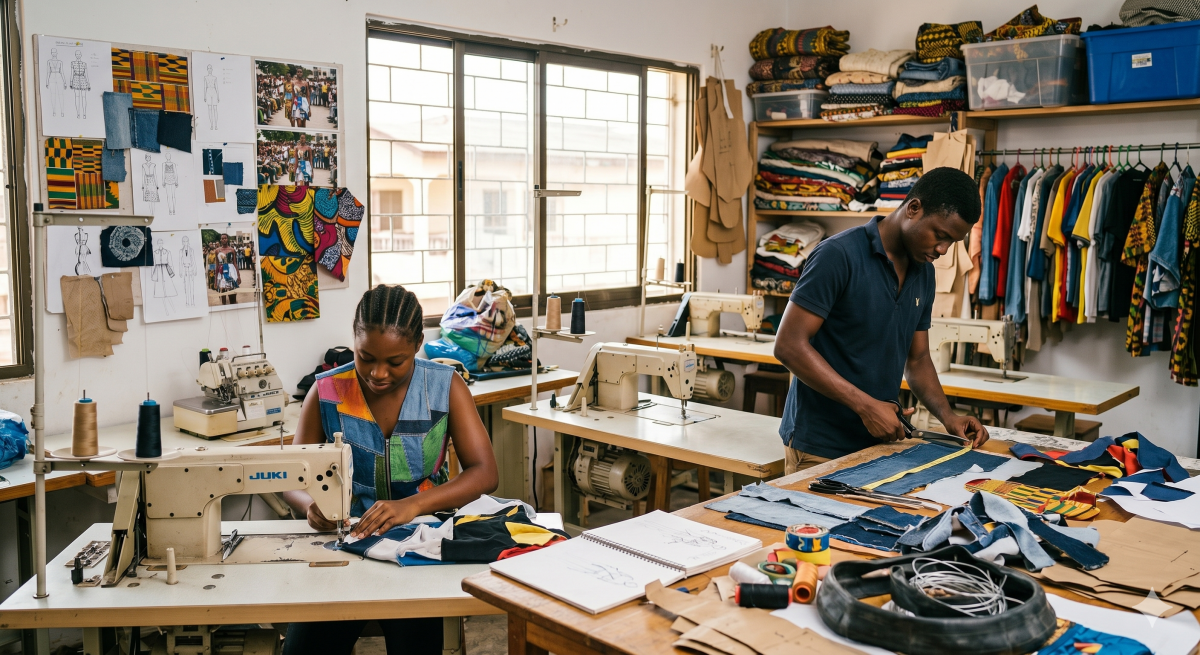
While viral videos are the spark, long-term empowerment happens when young creators organize. Across West Africa, a massive shift is occurring where young designers are establishing independent ateliers, youth design spaces, and open-source fashion houses. By creating community-led fashion incubators and peer-to-peer design workshops in local neighborhoods, the raw, unfiltered energy seen on social media can be honed into sustainable, community-owned fashion brands.
By organising into decentralised networks, raw talent can be seamlessly integrated into a sustainable, independent supply chain that benefits creators directly.
| From the Streets… | …To Independent Creative Freedom |
|---|---|
| Raw Vision: Kids experimenting with silhouettes, scrap fabrics, and digital storytelling. | Grassroots Incubators: Creating independent youth centers equipped with sewing tables, upcycling tools, and local design mentors. |
| Digital Execution: Using smartphones to capture raw, unfiltered design power. | Localised Economic Power: Transforming a passion into neighborhood-level employment, ensuring fashion benefits local communities first. |
| Cultural Capital: Keeping the creative and monetary value of African design directly in the hands of the community. | Localized Economic Power: Transforming a passion into neighborhood-level employment, ensuring fashion benefits local communities first. |
The Structural Shift: Kalu Putic proves that the continent possesses an innate, unteachable design language. By equipping young creators with localised workspace access, creative peer networks, and decentralized digital distribution, the next generation can turn street aesthetics into viable, independent creative careers.
Kalu Putic didn’t wait for an invitation to a European gala—he built his own stage against a concrete wall and let the world come to him.
If we can foster that exact same unapologetic, resourceful mindset in Ghanaian kids—while simultaneously supporting the independent creative hubs, local design networks, and open-source spaces that nurture them—Africa won’t just be a consumer of global fashion trends. We will be the ones dictating them.
To gain a deeper perspective on how his creative process works, you can watch Kalu Putic: The Ethiopian Designer Who Amazed the World, which explores his journey of transforming discarded items into world-class design structures and shows the exact visual mindset discussed in the article.
