Head Office
No. 8 Klunye Adjele Street
East Legon, Accra – Ghana

No. 8 Klunye Adjele Street
East Legon, Accra – Ghana

For a long time, the idea of “Space Programs” in Africa felt like a luxury—a conversation for scientists in lab coats, far removed from the red soil of our farmlands. But in 2026, the narrative has flipped. Some of the most important tools in a modern farmer’s kit aren’t just tractors and hoes; they are the African-owned satellites orbiting 500 kilometers above us.
From Egypt’s MisrSat-2 providing high-resolution Earth observation to South Africa’s EOSat-1 and Nigeria’s NigeriaSat-2, we are no longer just consumers of global data. We are producers of it. Here’s how this “Eye in the Sky” is putting more food on our tables and more money in our farmers’ pockets.
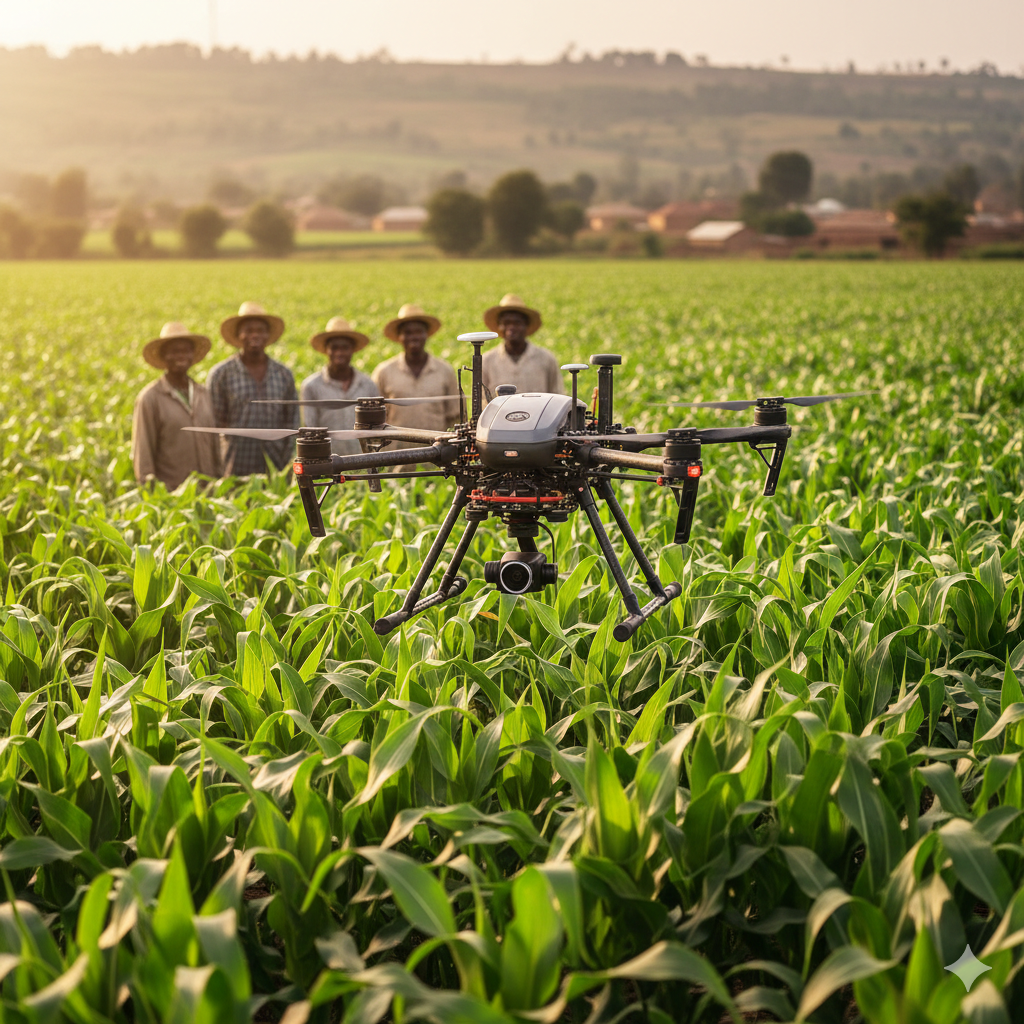
Rainfall patterns are shifting. The “traditional” planting calendars passed down through generations are being rewritten by climate change. Satellites like Sentinel-1 (integrated into African platforms) can “see” through cloud cover to measure soil moisture with millimeter precision. This means farmers no longer have to guess when to plant; they get a text message telling them exactly when the ground is ready.
In 2020, the East African locust swarms were a wake-up call. Today, satellite data helps us stay ahead of the curve. By detecting spectral reflectance anomalies—essentially seeing “stress” in a leaf before the human eye can—satellites can predict pest outbreaks or drought months in advance. In Uganda, satellite-triggered disaster financing has already saved millions in aid costs by providing relief before the crop fails, not after.
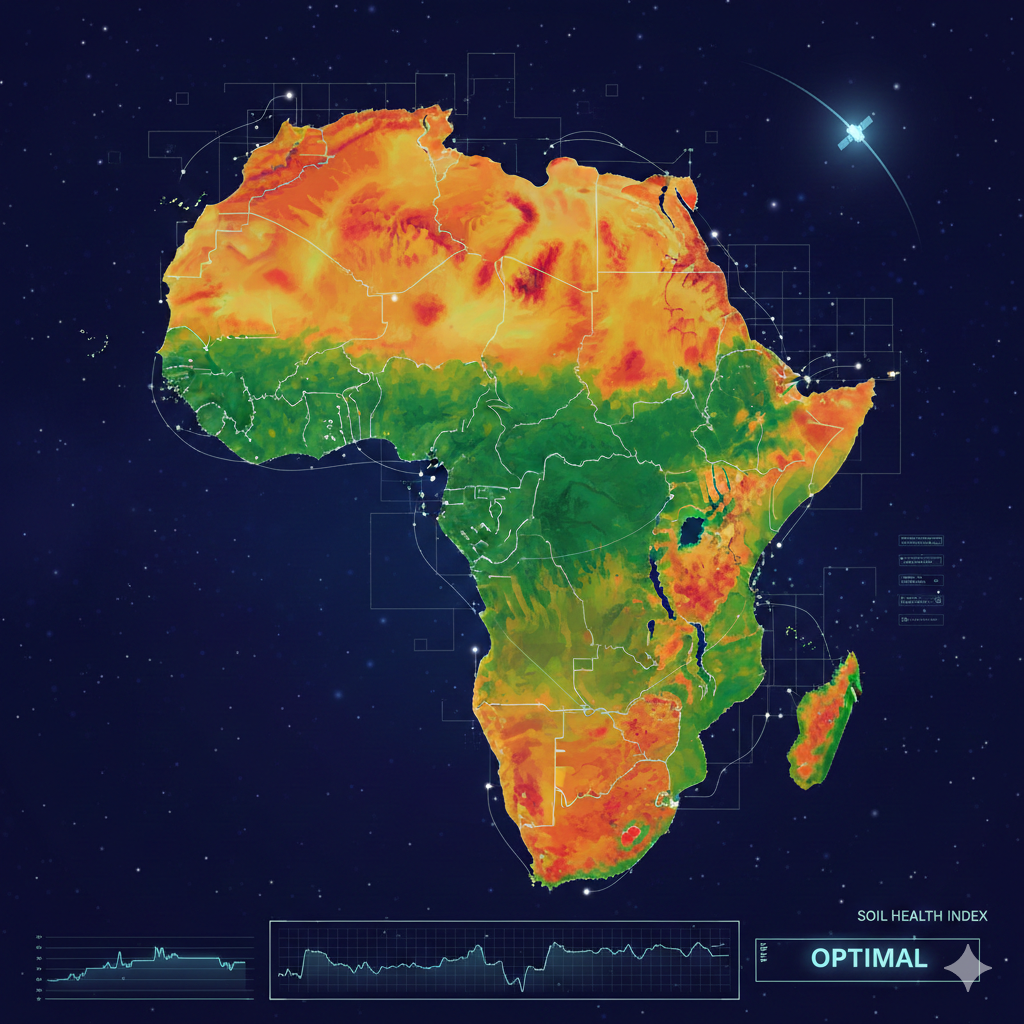
You don’t need a 1,000-hectare farm to benefit from space tech. Mobile apps are now “translating” complex satellite imagery into simple, actionable advice for smallholder farmers.
This isn’t just about big data; it’s about Big Impact. When a farmer increases their yield by even 20% due to better timing and fewer pests, that surplus pays for school fees, expands local markets, and stabilises food prices for everyone.
The African space industry is projected to reach $20 billion by the end of this year. But the real value isn’t in the satellites themselves—it’s in the sovereignty of our data. We are finally seeing our continent through our own eyes, and the view looks like a record-breaking harvest.
