Head Office
No. 8 Klunye Adjele Street
East Legon, Accra – Ghana

No. 8 Klunye Adjele Street
East Legon, Accra – Ghana

One of the most frustrating experiences for consumers is discovering that a product they once loved is no longer what it used to be.
The taste changes, the quantity reduces, the durability declines and the quality that initially attracted customers slowly disappears.
Unfortunately, this has become an increasingly common complaint among Ghanaian consumers.
Across various sectors; from manufacturing and retail to food and beverage production, many businesses appear to follow a troubling pattern: they enter the market with exceptional products, build customer loyalty, gain competitive advantage, become household names, and then gradually compromise on quality.
For many consumers, this is not merely perception. It is an everyday reality.

When most businesses are introduced into the market, they understand that consumers have options.
As a result, they invest heavily in:
They work tirelessly to earn trust and establish credibility.
Consumers respond positively; the business grows; sales increase; market share expands and the brand becomes a household name.
This is exactly how successful businesses should grow. However, the problem begins when success breeds complacency.
Many consumers can easily identify products that no longer offer the same value they once did.
Ask customers about products they have used for years, and many will tell you stories of:
The most concerning aspect is that these changes often occur after a company has already secured a strong position in the market.
Once consumers have become familiar with a brand, some businesses appear to assume that customer loyalty is guaranteed.
That assumption can be dangerous.

There are several reasons businesses may reduce quality over time.
Rising production costs, inflation, exchange rate fluctuations, and supply chain challenges can all place pressure on companies.
However, some businesses respond by making cost-cutting decisions that directly affect product quality.
While such decisions may improve short-term profitability, they often create long-term risks.
Consumers may not immediately switch brands, but they notice.
And once trust begins to erode, rebuilding it becomes extremely difficult.
Many companies focus heavily on financial assets while overlooking one of their most valuable resources: Consumer trust.
Trust is what convinces a customer to choose one product over another; Trust is what transforms first-time buyers into loyal customers; Trust is what protects a business during difficult economic periods.
The moment customers begin to feel deceived or disappointed, that trust starts to disappear.
In today’s digital environment, dissatisfied consumers can quickly share their experiences with thousands of others through social media, online reviews, and word-of-mouth recommendations.
A damaged reputation can spread much faster than a marketing campaign.
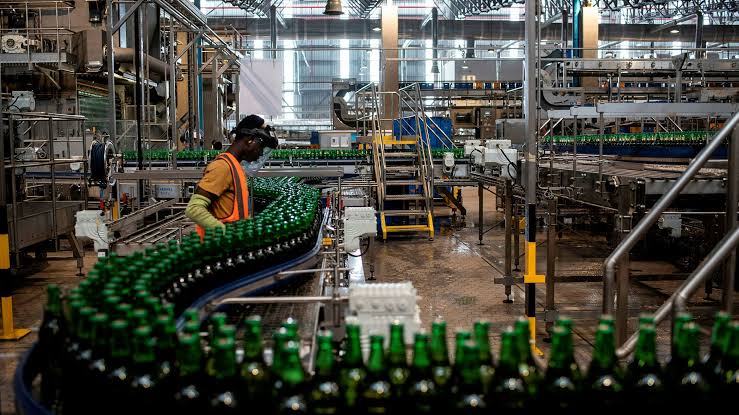
The most successful businesses in the world understand a simple principle: Quality is not an expense; it is an investment.
Companies that maintain high standards over decades are often the ones that achieve sustainable growth.
Consumers reward consistency.
They remain loyal to brands that continue to deliver value even after becoming successful.
Businesses that prioritize quality enjoy:
The opposite is also true.
When quality declines, competitors quickly identify opportunities to attract dissatisfied customers.

The Ghanaian business environment is becoming increasingly competitive.
Consumers today are more informed, more connected, and more willing to explore alternatives. This means businesses can no longer assume that market dominance guarantees permanent success.
Companies must understand that every reduction in quality sends a message to consumers.
That message often says: “We value profits more than we value your experience.”
No business should want to communicate that message.
Instead, successful companies should continuously ask:
Consumers should not underestimate their influence because businesses respond to customer behavior.
When consumers demand quality, provide honest feedback, and support businesses that maintain high standards, they help create a culture of accountability.
Customer loyalty should never be unconditional.
It should be earned continuously through consistency and value.

The true test of a business is not how it performs when it is trying to win customers.
The true test is how it behaves after it has already won them.
Many Ghanaian businesses have built strong brands through hard work, innovation, and quality products. They should be commended for that achievement.
However, maintaining consumer trust requires the same commitment that built the brand in the first place.
Success should inspire higher standards, not lower ones. Because in the end, customers may forgive mistakes.
But they rarely forget when a business sacrifices quality after earning their trust.

I actually had Kivo gari yesterday and the taste was quite different from what I was used to. It made me wonder if the focus on introducing new products is taking some attention away from the quality of the product that earned customers’ trust in the first place. If that’s the case, I really hope it’s looked into because consistency is what keeps customers coming back.