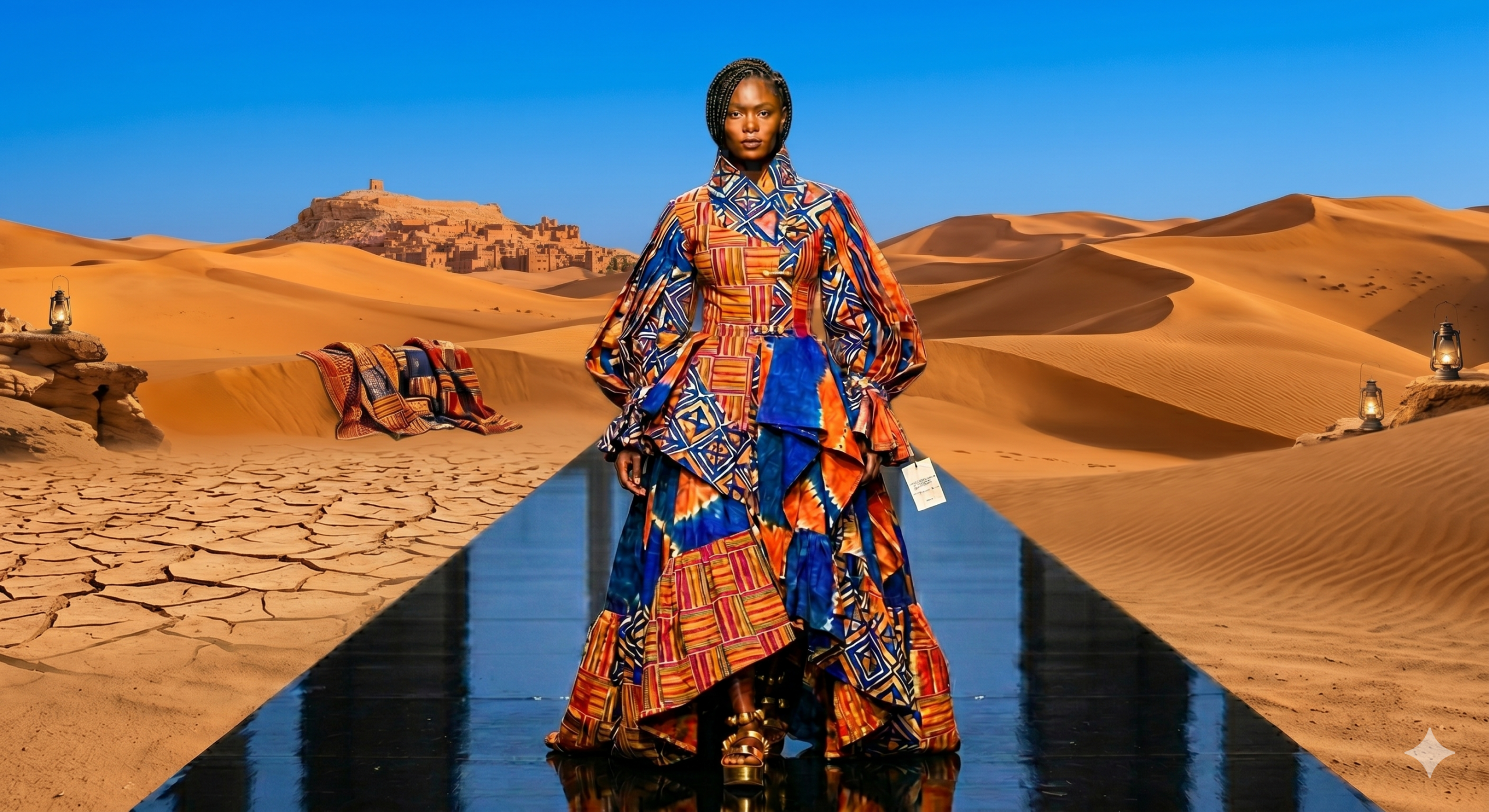
Why African Fashion is a Top-Tier Investment in 2026
By Xolani AnnakieMultidisciplinary Creative, Africa Initiative Impact Program (AIIP)
For decades, the global narrative around African fashion was one of “inspiration.” We saw our prints on international runways and our heritage woven into “tribal” collections by European houses. But in 2026, the story has shifted. We are no longer just the inspiration; we are the industry.
As a multidisciplinary creative at the Africa Initiative Impact Program (AIIP), I’ve watched this transformation firsthand. Fashion in Africa is moving from the atelier to the boardroom, evolving into a strategic “Orange Economy” asset that is essential for the continent’s industrial future.
The $15.5 Billion Opportunity
The numbers are finally matching the talent. According to the latest UNESCO report on the African Fashion Sector, the continent already exports US$15.5 billion in textiles, clothing, and footwear annually.
However, a massive “value gap” remains. While Africa is a raw-material powerhouse, 37 out of 54 African countries produce cotton, and we historically exported that lint only to buy it back as finished garments. This deficit is our greatest investment opportunity. By localising production, we aren’t just making clothes; we are making a middle class.
3 Reasons Why African Fashion is a Strategic Investment
1. The AfCFTA Multiplier
Before the African Continental Free Trade Area (AfCFTA), a designer in Accra faced more hurdles shipping a dress to Nairobi than to New York. Today, the removal of intra-African tariffs is creating a unified market of 1.3 billion people.
This allows for Regional Value Chains where cotton from Benin is spun in Ghana, designed in Nigeria, and sold in South Africa—all duty-free. As noted by the International Trade Centre (ITC), these structured corridors are essential for moving from “tailoring” to “manufacturing” at scale.
The global fashion industry is under fire for its environmental footprint. African fashion has “Slow Fashion” in its DNA. From hand-woven Kente to the use of natural fibers like raffia and hemp, our traditional methods are inherently sustainable. In a world where ESG (Environmental, Social, and Governance) scores drive investment, African brands are uniquely positioned to lead the global Circular Economy.
3. The Diaspora: Our Global Showroom
At AIIP, our Diaspora Relocation & Investment Services see a recurring theme: the diaspora are the ultimate brand ambassadors. They aren’t just consumers; they are the bridgeheads. We see this in the global trajectory of @Christie Brown, led by the visionary @Aisha Ayensu. By moving Ghanaian luxury into the closets of global icons, they have proven that African design isn’t just a “trend”—it is a high-value export.
The Infrastructure of Influence: Beyond the Fabric
To sustain this growth, we must look at the structural support systems being built across the continent. Standing out in 2026 are the institutions and individuals bridging the gap between “creativity” and “compliance”:
Intellectual Property & Policy: Organizations like the @Fashion Law Institute Africa are critical. Their work—including the recent “Top 100 Women in African Fashion” list—provides the data and legal frameworks necessary to protect our heritage while incentivizing investment.
Education & Tech: Innovation hubs led by experts like @Eme Bassey (Co-founder of the Center for African Fashion Education & Technology) are ensuring the next generation is “Tech-Ready,” integrating 3D modeling and sustainable supply chain tracking into their workflows.
Pan-African Synergy: The success of designers like South Africa’s @Thebe Magugu (LVMH Prize winner) proves that when African excellence is backed by structured investment, it dominates the global stage.
The Road Ahead: From “Made in Africa” to “Managed by Africa”
To truly gain traction, we must move beyond the runway. The next phase of growth requires:
Structured Workforce Systems: Training the next generation in high-spec garment manufacturing, not just tailoring.
Digital Trade Infrastructure: Reducing “payment friction” and logistics overhead that hampers cross-border creative trade.
Institutional De-risking: Creating investment frameworks that recognize creative talent as viable collateral for financing.
Final Thoughts
African fashion is the most visible expression of our soft power. But soft power only stays “soft” until you back it with hard infrastructure. At AIIP, we are committed to providing the trade advisory and governance frameworks that turn these creative sparks into industrial wildfires.
The world is wearing Africa. It’s time Africa owned the factory.
References
UNESCO (2023).The Fashion Sector in Africa: Trends, Challenges and Opportunities for Growth. [Online] Available at: unesco.org
International Trade Centre (ITC) (2025).Promoting Intra-African Trade in the Garment and Textile Sector. [Online] Available at: intracen.org
AfCFTA Secretariat (2024).The Future of the African Creative Economy under the AfCFTA Agreement.
World Bank (2025).Digital Financial Inclusion and the Cost of Remittances in Sub-Saharan Africa.
Oxford Business Group (2026).Ghana: Harnessing the ‘Orange Economy’ for Sustainable GDP Growth.