Head Office
No. 8 Klunye Adjele Street
East Legon, Accra – Ghana
No. 8 Klunye Adjele Street
East Legon, Accra – Ghana
By Xolani Annakie for the African Initiative Impact Project (A-IIP)
If you’ve walked through Osu or scrolled through the latest Chale Wote digital galleries lately, you know the vibe is shifting. This year, the Chale Wote Street Art Festival has officially expanded its permanent footprint into the Osu metropolitan area, proving that our creative energy is outgrowing its historic roots in James Town. We’re seeing Kente patterns woven into 3D digital landscapes and Adinkra symbols reimagined by neural networks. Accra’s art scene isn’t just “street” anymore; it’s tech-coded.
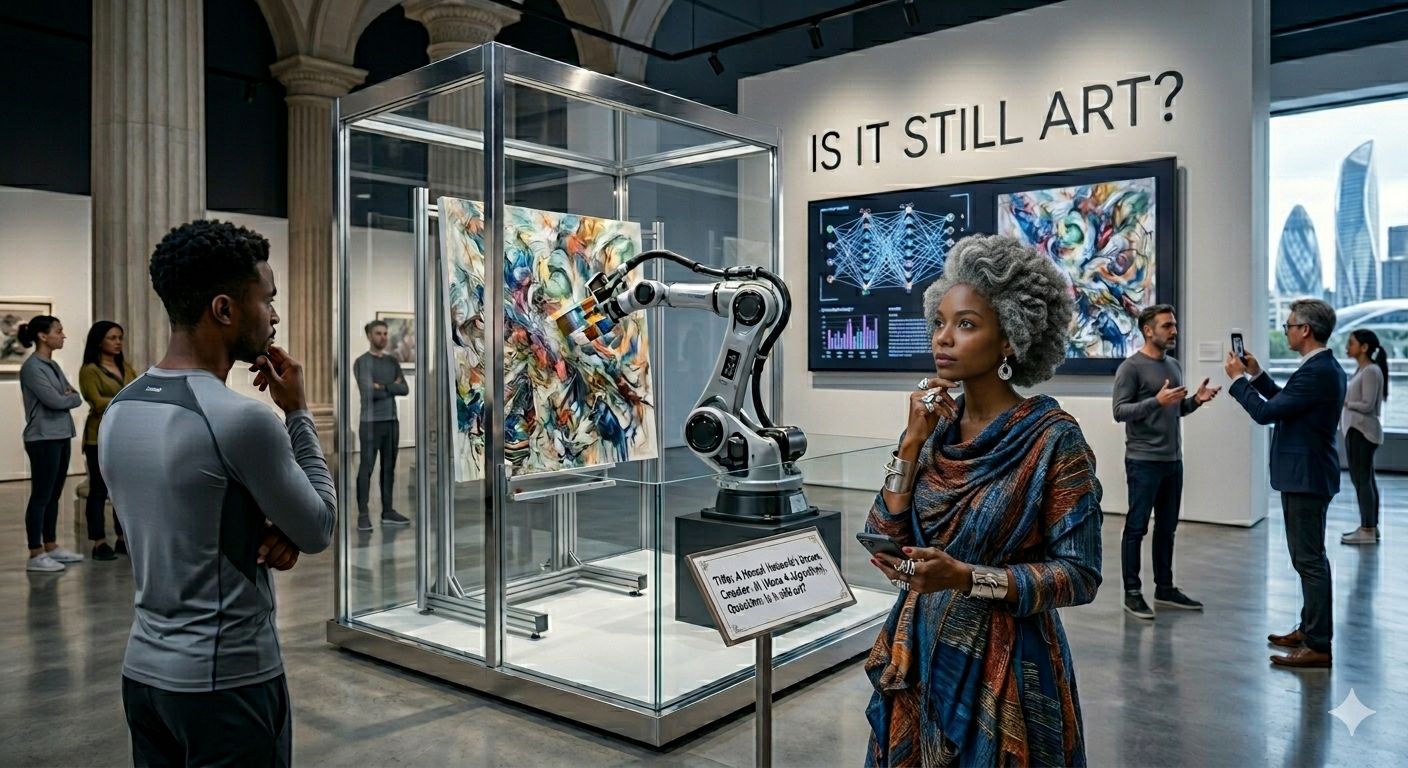
But as AI-generated art and digital fashion take over our feeds, a heated debate is bubbling up: Is AI celebrating our culture, or is it just harvesting it?
AI models are trained on data. That means they’ve “learned” what Ghanaian art looks like by scanning millions of images of our heritage. This isn’t just a tech issue; it’s a sovereignty issue. We saw this tension earlier this year when the Ministry of Education faced backlash from the GaDangme Council for initially excluding the Ga language—the very language of Chale Wote, from a new AI-powered educational pilot. When AI mimics our culture without our language or history, it creates what experts call “Digital Colonialism”—simulating our narratives without engaging the people to whom they belong.
At A-IIP, we aren’t anti-tech; we’re pro-authenticity. We believe in using the tools without letting the tools use us. The good news is that we are fighting back. As of late 2025, Kente cloth has officially been granted Geographical Indication (GI) status by the World Intellectual Property Organization (WIPO). This means only hand-woven cloth from certified Ghanaian communities can legally be called “Kente.”
This legal win is a blueprint for our digital art. It proves that our “Human Pride” has a value that a printer or an algorithm cannot replicate. The best “Tech-Art” at Chale Wote is the work where a human artist took an AI base and added their own soul and their own “glitches.”
As we go global, we have to be careful. If the world only sees the “perfect,” AI-generated version of Ghana, they miss the beauty of our reality. Our art is powerful because it’s tied to our struggle, our joy, and our hands. A robot can mimic a brushstroke, but it can’t mimic the spirit of a crowded Accra market on a Saturday morning.
