The Hard Truth: How Data Costs and Crowded Classes Are Harming Students in Ghana and Sierra Leone
Xolani Annakie
I. The Daily Fight to Learn
Young people in Ghana and Sierra Leone want to learn, but they face huge hurdles that have nothing to do with how smart they are. In 2026, the biggest problems in schools include:
The Internet is Too Expensive: The “digital age” is missing many students. To research a topic online, a student in Accra or Freetown must choose between buying a data bundle or buying food.
The Knowledge Gap: Students in rural villages have a much harder time than those in the cities. A student in a village often shares one old textbook with five other classmates, while city kids have better access to new books.
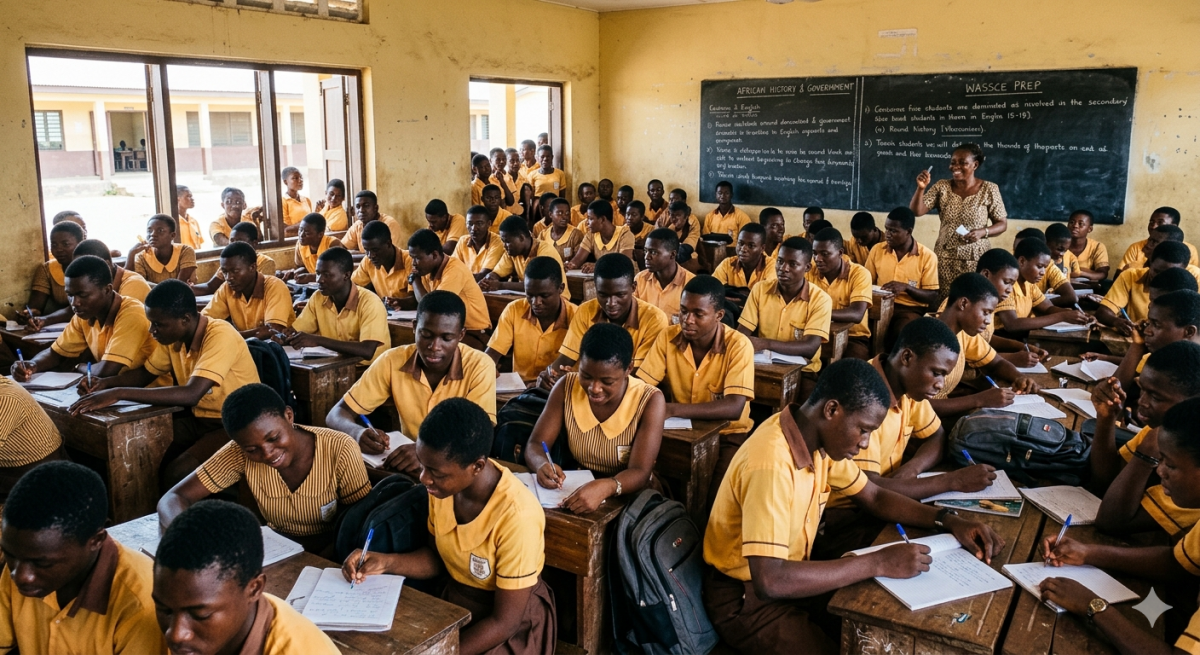
Crowded Classrooms: In many Senior High Schools, one teacher is responsible for over 60 students in a single room. It is impossible for a teacher to give every student the personal help they need.
A Catch-22 for Girls: When school is out, many girls are expected to do most of the housework and cooking. This means they have less time to study or rest compared to the boys, making it even harder for them to keep up.
II. Simple, Local Solutions: Breaking the Walls Down
We do not need to wait for rich countries to save our schools. Governments and communities can fix these problems now by focusing on what works locally:
1. Free “Educational Data”
Governments must force phone companies (like MTN or Orange) to make school websites completely free to browse.
The Impact: This means a student with a zero balance on their phone can still download textbooks and past exam papers without needing to buy data.
2. Community Study Centers
Local leaders can turn unused community halls or churches into solar-powered study centers.
The Impact: These hubs would be a safe, brightly lit place for evening study, which is especially important for girls who need a space to focus away from domestic duties.
3. Mentorship and Vocational Training
Instead of just teaching rote memorization, schools should teach practical skills like solar energy installation or digital entrepreneurship.
The Impact: When a student graduates, they are ready to start a business or get a technical job right away, rather than waiting for a job that doesn’t exist.
III. Conclusion
The problem facing students in Ghana and Sierra Leone is not a lack of effort. It is a lack of simple access. If we stop focusing on things they cannot use (like expensive apps) and start focusing on what they can (like free educational data and a safe place to study), we can change everything. Every young person deserves a fair chance to succeed.
References
UNESCO (2025).Report on Digital Access for Schools in Sub-Saharan Africa.
Ghana Education Service (GES).Review of the Free Senior High School (SHS) Policy Implementation.
Sierra Leone MBSSE (Ministry of Basic and Senior Secondary Education).Strategic Plan for Free Quality Education 2024-2026.
African Union (2025).Updated Report on Data Costs and Youth Access to Education.
Kargbo, S. (2025). “Understanding the Challenges for Female Students in Rural Sierra Leone,” West African Social Journal.