Head Office
No. 8 Klunye Adjele Street
East Legon, Accra – Ghana

No. 8 Klunye Adjele Street
East Legon, Accra – Ghana
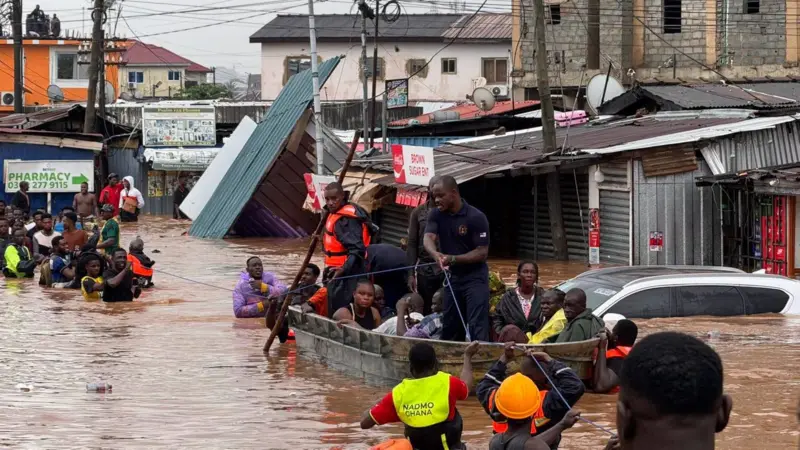
The recent flooding situation that swept across Accra have once again left behind a trail of destruction, grief and difficult questions. Families lost loved ones, businesses were submerged, roads became rivers, and thousands of residents found themselves stranded in their own communities.
Once again, emergency responders—particularly the Ghana National Fire Service and the National Disaster Management Organisation (NADMO)—worked tirelessly to rescue trapped residents, often at great personal risk. Despite their extraordinary efforts, lives were lost and millions of cedis worth of property were destroyed. According to official reports, at least ten people died in the latest flooding, while hundreds more had to be rescued from floodwaters across the Greater Accra Region.
Sadly, this is not a new story.
For more than a decade, flooding in Ghana, particularly in Accra, has become an almost predictable national crisis. Every rainy season brings the same heartbreaking headlines, the same promises of reform, and the same wave of public outrage. We mourn the victims, investigate the causes, issue political statements, and gradually return to normal life—until the next disaster strikes.
This recurring cycle should concern every Ghanaian.
Flooding is no longer simply a seasonal emergency or an unavoidable consequence of heavy rainfall. It has increasingly become a test of governance, urban planning, environmental management and institutional accountability.
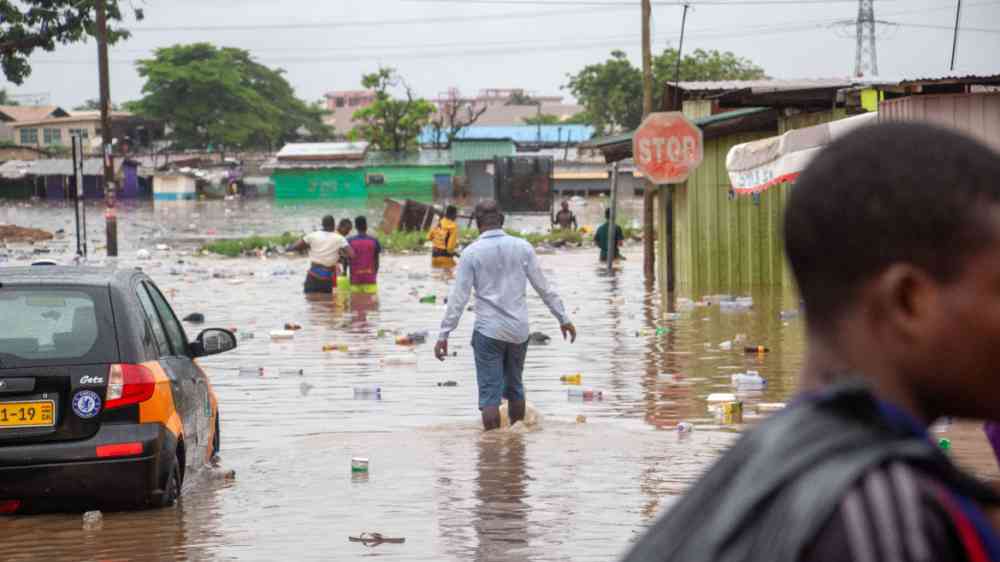
Recently, the President attributed part of Accra’s flooding problem to the city’s growing population. There is certainly merit in this observation.
Each year, thousands of Ghanaians migrate from other regions to Accra in search of employment, education, healthcare and better economic opportunities. The capital continues to expand well beyond the capacity originally envisioned by its planners, placing enormous pressure on roads, drainage systems, sanitation infrastructure, housing and other public services.
Population growth, therefore, forms part of the conversation.
However, it is far from the complete explanation.
To attribute flooding in Ghana primarily to overpopulation risks overlooking deeper structural failures that successive governments have struggled to confront with the urgency they deserve. Population growth, by itself, does not automatically produce recurring floods.
Around the world, there are cities with populations many times larger than Accra that experience intense seasonal rainfall without suffering annual humanitarian disasters. Their success is not simply a function of population size. It is the product of effective urban planning, resilient infrastructure, consistent enforcement of environmental regulations and long-term governance.
The difference lies not merely in the number of people living in a city, but in how well that city is planned, managed and governed.
The real question before us, therefore, is not simply why more people are moving to Accra.
The more important question is why our institutions have consistently failed to prepare for that reality.
Migration is one of the oldest characteristics of human civilisation. Throughout history, people have moved in search of greater economic opportunities, better education, improved healthcare and enhanced quality of life. Internal migration is both a constitutional right and an important driver of national development.
Governments cannot and should not prevent citizens from relocating within their own country.
The responsibility of government is not to stop migration. Rather, it is to anticipate population movements, plan for them, and manage their consequences through sound public policy and sustainable urban development.
Unfortunately, this is where Ghana has consistently fallen short.
For decades, Accra has remained Ghana’s undisputed centre of government, commerce, finance, higher education and formal employment. Naturally, businesses establish themselves where infrastructure, institutions, markets and consumers are already concentrated.
This creates a self-reinforcing cycle.
More businesses attract more people.
More people increase demand for housing, transportation, utilities and public services.
Greater demand attracts additional investment.
The city continues expanding, while infrastructure struggles to keep pace with the speed of urban growth.
Meanwhile, many districts and municipalities across the country remain underdeveloped despite possessing enormous economic potential.
Thousands of young people leave their hometowns every year—not because they necessarily wish to, but because opportunities remain concentrated in Accra and a handful of other urban centres.
Rather than developing vibrant regional economies capable of retaining their populations, Ghana has unintentionally encouraged an excessive dependence on its capital city.
That imbalance has profound implications not only for economic development but also for environmental sustainability, disaster resilience and long-term national planning.
The consequences of this imbalance are increasingly visible across the capital.
Communities continue expanding into wetlands.
Buildings appear along waterways.
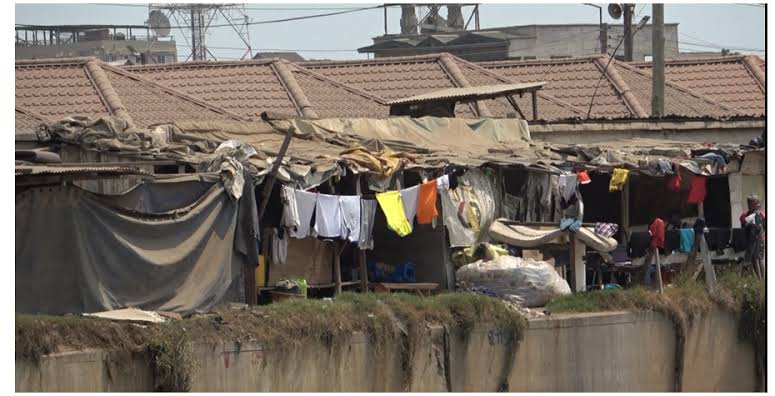
Informal settlements emerge without adequate drainage infrastructure.
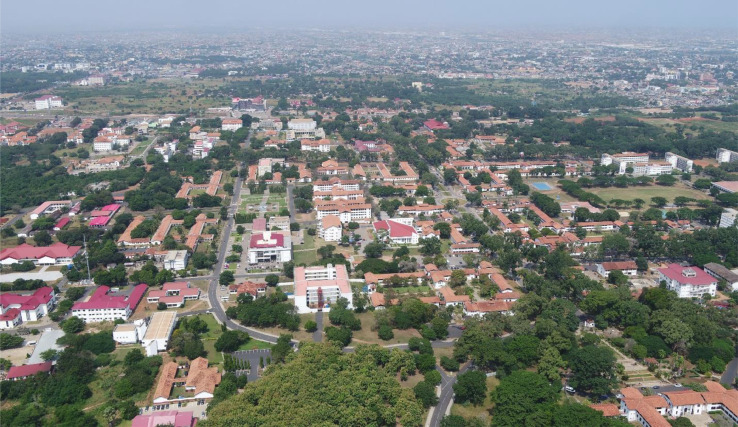
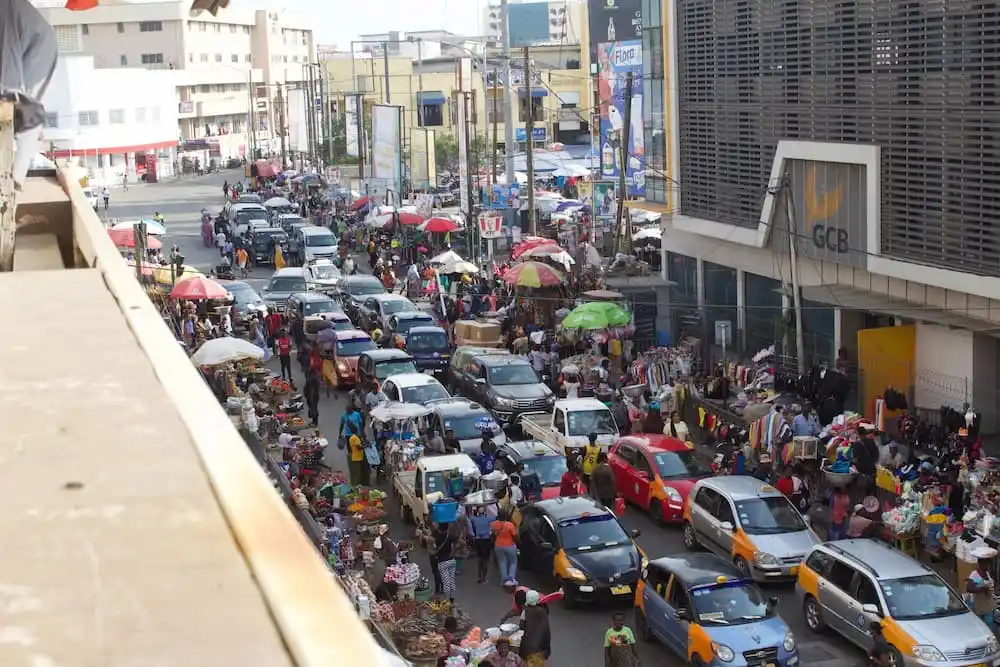
Markets spill onto roads originally designed to facilitate movement and stormwater management.
Roadside trading occupies spaces intended for drainage corridors.
Natural watercourses become obstructed by unplanned development.
At the same time, drainage channels designed to carry stormwater are increasingly used as dumping grounds for household refuse and other waste.
These realities are not simply the inevitable consequences of having more people.
They are the consequences of urban expansion occurring faster than planning, regulation and enforcement.
That distinction matters.
Population growth creates pressure.
Poor governance turns that pressure into disaster.
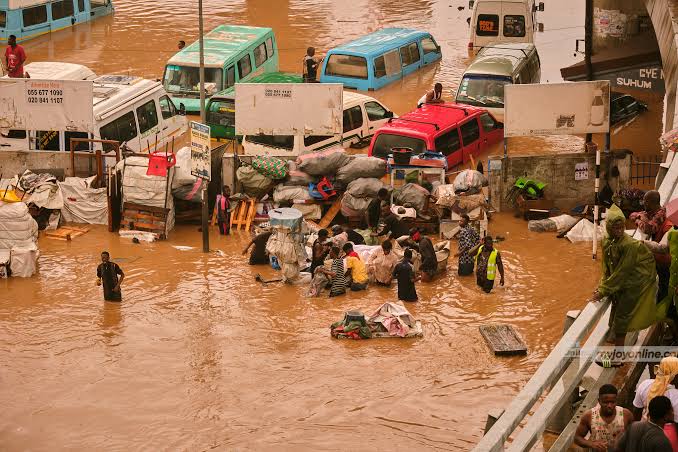
The latest floods should become more than another national tragedy. They should serve as a turning point in how Ghana approaches urban development, environmental governance and disaster preparedness.
While rapid population growth places undeniable pressure on Accra’s infrastructure, it does not, by itself, explain why flooding has become a recurring national crisis. The deeper causes lie in decades of inadequate urban planning, inconsistent enforcement of planning and environmental laws, weak institutional accountability, poor waste management practices and insufficient investment in resilient infrastructure.
Ghana possesses the legal frameworks, technical expertise and institutional structures needed to address these challenges. What has often been lacking is the political will, policy consistency and collective responsibility required to implement them effectively.
If we continue to treat each flood as an isolated emergency, we will remain trapped in a cycle of rescue, relief and reconstruction. However, if we confront the structural causes with courage and foresight, Ghana can transform its approach from disaster response to disaster prevention.
Our emergency responders have repeatedly demonstrated extraordinary commitment in the face of adversity. The question now is whether our institutions, political leaders and citizens will demonstrate an equal commitment to preventing the tragedies that require their heroism.
History will judge us not by how compassionately we respond after the floodwaters rise, but by whether we had the vision and determination to prevent those disasters in the first place.
