Head Office
No. 8 Klunye Adjele Street
East Legon, Accra – Ghana

No. 8 Klunye Adjele Street
East Legon, Accra – Ghana
Written by Xolani Annakie
In the quiet corners of Reddit and TikTok, a new movement has taken over the screens of Gen Z and Millennials from Accra to Freetown: Cosy Gaming.
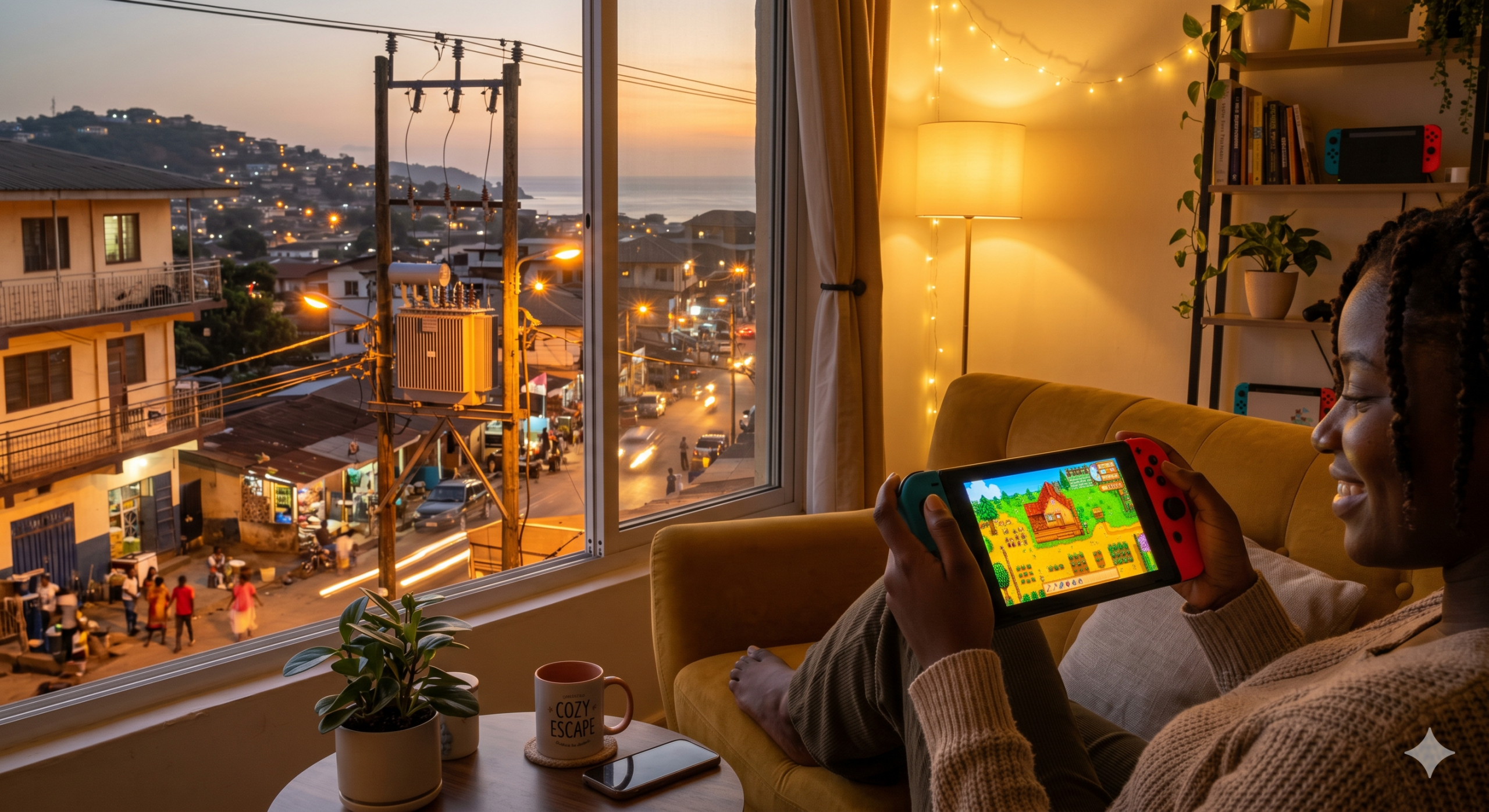
While previous generations spent their youth playing high-stress, competitive shooters, today’s youth are opting for “low-stakes” simulators. Whether it’s tending to a digital farm in Stardew Valley or meticulously building an eco-friendly camper in the upcoming solar-powered explorer, Outbound, these games offer something the real world currently feels short on: control, stability, and a sense of ownership.
But there is a catch. You can’t build a virtual sanctuary if your real-world power grid is under renovation.
When we talk about the Electricity Company of Ghana (ECG) injecting 2,500 new transformers into the national grid, the conversation usually centers on “Trade Advisory” or “Industrial Growth.” While those are vital, there is a more human side to infrastructure that often gets ignored—The Infrastructure of Joy.
For a 22-year-old in Kumasi or a freelance designer in Freetown, reliable energy isn’t just about keeping the lights on for a meeting; it’s about protecting the “Virtual Escape.”
With global inflation making real-world home ownership feel like a distant dream for many West African youths, virtual spaces have become the new frontier for self-expression.
Infrastructure projects are effectively building the foundation for this digital lifestyle. For example, the successful completion of renewable energy mini-grids in Sierra Leone shows that when the grid is stable, the digital economy thrives—and so does the mental well-being of the youth. When you have light, you have the power to play, and when you play, you have the power to recharge your own internal battery.
“We aren’t just fixing the grid for the factories. We’re fixing it so the next generation can dream, play, and build—even if that building starts in a virtual world.”
To understand why millions are choosing virtual farming over high-speed action, check out this deep dive into the “Cosy” phenomenon:
VIDEO: COZY SWITCH GAMES FOR YOUR MENTAL HEALTH
References & Resources:
#CozyGaming #GhanaTech #DigitalEconomy #PoweringGhana #SoftLife #GenZAfrica #InfrastructureOfJoy #GamingCommunity
